

Painting · Southeast Wisconsin
Exterior painting built for Wisconsin winters.
Exterior house painting in Waukesha County and Greater Milwaukee built for southeast Wisconsin's freeze-thaw winters, humid summers, and hail-and-wind storm season.
- Bonded & insured
- Free, no-pressure estimates
- Written warranty up to 10 years
Exterior painting · before and after
From tired to transformed.
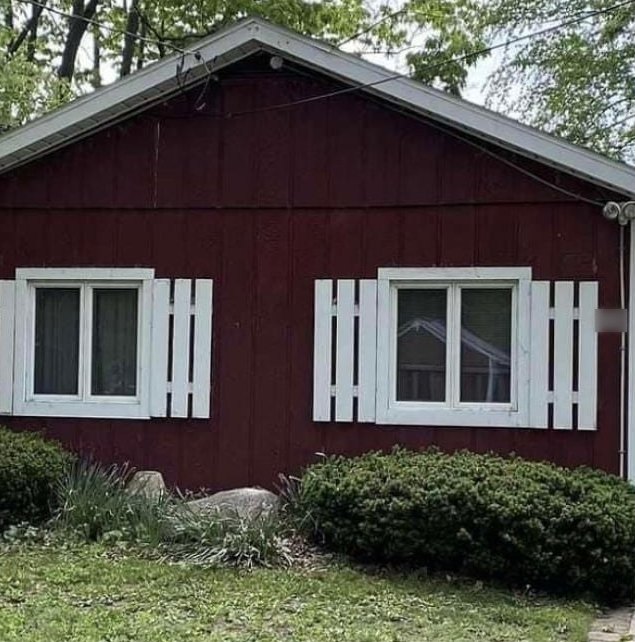 Before
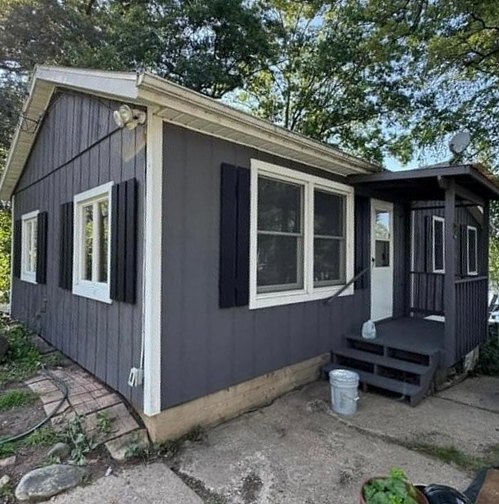 After
A full exterior repaint. Prep-first, finished to last.
Exterior siding and trim repaint.
The Wisconsin problem
Exterior House Painting Built for Southeast Wisconsin Weather
From Brookfield and Pewaukee to Wauwatosa and Mequon, we prep wood, LP, vinyl, and fiber-cement siding the right way and finish with premium acrylics engineered to flex through the cold — scheduled inside the short Wisconsin painting season.
A paint job in Waukesha County has to survive a brutal range: sub-zero January cold, ice dams along the eaves, spring vapor drive as the house thaws, humid 90-degree July afternoons, and summer hail and wind storms rolling across Lake Country. That swing is exactly why exterior paint fails early here when it's applied wrong. Our coating systems are flexible, breathable and chosen for this climate, not a one-size finish meant for a milder region. The goal is simple: a finish that still looks sharp after several Wisconsin winters, not one chalking and peeling by the second spring.
Why Wisconsin Paint Peels: Freeze-Thaw, Vapor Drive, and Moisture
Most exterior failures in Milwaukee and Waukesha homes trace back to water and temperature, not the brand of paint. Freeze-thaw cycling through a long freezing season expands and contracts siding, cracking brittle coatings and opening seams for water to creep behind. In winter, warm indoor humidity pushes outward through the wall as vapor drive; when that moisture hits cold paint with poor adhesion, it lifts the film from the inside out. We diagnose the moisture source first, prime bare and chalky surfaces to re-establish a bond, and select breathable coatings that let the wall release vapor instead of trapping it. Our guide on why paint peels after a Wisconsin winter shows how to tell those causes apart before anything is repainted, and our guide to the signs your exterior needs repainting walks the house element by element.
What’s included
- Owner-performed painting — not subcontracted day labor
- Prep-first system: pressure wash, scrape, sand, prime bare wood, and re-caulk before a drop of finish coat goes on
- Premium 100% acrylic exterior coatings that stay flexible through Wisconsin freeze-thaw cycles and resist UV fade and peeling
- Wood fence painting and staining: cleaned, dried and coated in dry weather
- Bonded & Insured · free written estimates with honest, specific recommendations
The prep sequence
Prep Is the Job: Pressure Wash, Scrape, Sand, Prime, Caulk
Prep is where a Wisconsin exterior is won or lost, and it's the step that gets skipped to hit a low number. Every project starts with a pressure wash to clean off chalk, dirt, mildew, and pollen (washing the surface, not blasting paint off), then full scraping and sanding of any loose or failed paint back to a sound edge.
Read moreShow less
Bare wood, exposed knots, and chalky spots get spot-primed so the finish actually adheres; failing caulk at trim, corners, windows, and butt joints is cut out and re-sealed with quality elastomeric caulk to keep wind-driven rain and snowmelt out. Only after the surface is clean, dull, sound, and sealed do we put on finish coats. Near a lake or a storm drain the wash needs containing too: Muskego’s stormwater code bars dumping substances or materials into its lakes or onto surfaces that drain into the storm system, and house washing is not among its exemptions (Muskego’s lakeside prep rules). Skip this on a Brookfield or Elm Grove home and the paint is failing before the warranty paperwork is dry. Published price ranges for this work, and why the lowest bid is usually the one that leaves prep out, are in our guide to what painting a house costs in Wisconsin.
-
Pressure wash
-
Scrape
-
Sand
-
Prime
-
Caulk
Materials
Siding We Paint: Wood, LP/Engineered, Vinyl, and Fiber-Cement
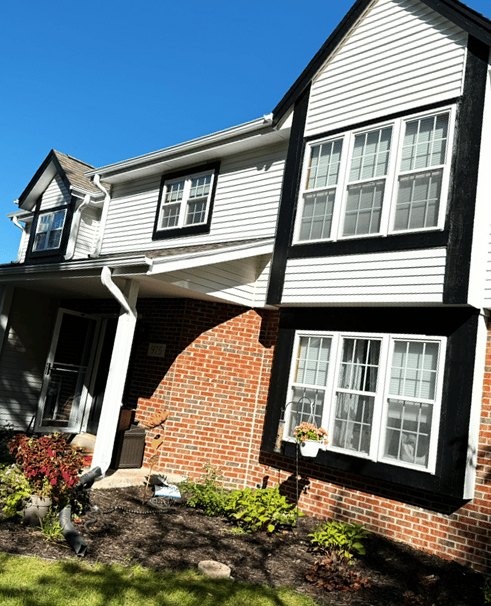
Southeast Wisconsin homes wear wood clapboard, LP and engineered-wood lap siding, vinyl, fiber-cement (think Hardie), brick, and aluminum, and each one demands a different approach. Old-growth and cedar wood siding needs careful moisture management and spot-priming to stop checking and tannin bleed. LP and engineered siding live or die on sealed edges and joints, where Wisconsin moisture loves to wick in. Vinyl can absolutely be painted, but only with vinyl-safe formulas that won't warp it in summer heat, and only in colors rated for it. Fiber-cement holds paint beautifully once it's clean and properly primed at cut edges. We match the coating system to your actual substrate instead of spraying everything the same way. Aluminum has its own history here: in Whitefish Bay, the village’s 2010–2011 architectural survey found that after the Second World War it became the standard siding on new houses, especially small Ranch and simplified Colonial Revival houses (Whitefish Bay’s postwar aluminum siding). Before repainting aluminum we wash off any chalky residue and prime bare metal.
Premium Acrylic Coatings That Flex Through the Cold
The right material for this climate is a high-quality 100% acrylic exterior coating that stays flexible instead of going brittle when temperatures drop. Acrylics expand and contract with the siding through freeze-thaw, hold their color against Wisconsin's intense summer UV, and resist the mildew that thrives in our humidity.
Read moreShow less
We apply at the correct film thickness and spread rate so you get the mil build the manufacturer designed, the part that separates a coating that lasts from a thin coat that fades. Color and sheen are chosen with your exposure in mind: north walls that hold moisture and snow longer get different consideration than the sun-baked south face. Quality material plus correct application is what buys you years instead of seasons. In some places the town has a say in color as well. Oconomowoc’s two isthmus zoning districts ask for colors that follow the practices common between 1870 and 1930 (Oconomowoc’s isthmus color rules), and Delafield’s historic downtown has an adopted 64-color palette (Delafield’s downtown palette). In Hartland and Mequon an Architectural Board reviews exterior changes, and neither town says in writing whether a new color counts, so ask before a big change (Hartland’s Board, Mequon’s Board). Elm Grove’s Building Board asks to see colors on the elevations of an exterior alteration, and no village page says whether a repaint alone needs its review (Elm Grove’s Building Board). In Wauwatosa, the Historic Preservation Commission reviews exterior changes that need a building permit on designated properties (Wauwatosa’s historic review). In the Village Centre overlay of Menomonee Falls, businesses, and homes that front Main Street or Appleton Avenue, are held to three colors, counting each shade as a color (the three-color rule in Menomonee Falls), and in the City of Pewaukee the maintenance exemption from historic review ends at a change of color, so a new color on a designated property needs a certificate (Pewaukee’s historic review).
Details and timing
Trim, Fascia, Soffits, Decks, and the Details That Fail First
On most Milwaukee-area homes, the finish fails at the details long before the field of siding does. Fascia and soffits take the brunt of ice dams and gutter overflow; window and door trim flexes and cracks caulk; railings, columns, deck rails, and exterior doors get the most sun, hands, and weather. We give these high-wear areas their own attention, with proper sanding, spot-priming, fresh caulk, and a durable finish so the crisp lines you paid for stay crisp. Painting the body and ignoring the trim is how a job looks tired in two years. Doing the details right is a quiet part of why an exterior still looks sharp years later. In Bay View, the city’s 1990 survey describes small workers’ cottages dressed in mass-produced millwork: machine-tooled window surrounds, turned porch posts and jigsawn “gingerbread” (Bay View’s cottages and their trim).
The Short Wisconsin Painting Season
Exterior paint needs the night after each coat to cooperate, not just the afternoon. Standard latex needs 50°F or warmer, and at the NOAA stations across Waukesha and Milwaukee counties most May and October nights fall below that; June through August are the steady months, with September next. Paints rated for 35°F stretch the season into May and early October when the forecast holds. Painting too late in fall, after nights turn cold and dew settles early, risks poor film formation, surfactant leaching and adhesion problems that show up the following spring. For the station-by-station dates, see when to paint in Wisconsin, month by month.
Fences
Fence Painting and Staining for Wood Fences
Wood fences take the same Wisconsin weather as your siding, only closer to the ground: snowmelt, sprinkler spray and splash-back keep the lower boards wet longer, and that is where a coating gives out first. We paint and stain wood fences across Waukesha County and Greater Milwaukee.
Read moreShow less
The boards are cleaned of dirt, mildew and loose fibers, then left to dry out, because a finish laid over damp wood is what peels. We check for loose boards and popped or rusting fasteners and point out repairs before coating. Then you choose the finish: paint gives an even, opaque color; a solid-color stain also covers the grain, in a thinner film that keeps the wood texture; a semi-transparent stain tints the wood and lets the grain show, and because it wears away rather than peeling, it is refreshed by recoating instead of scraping. Fence coatings need dry wood, dry weather and temperatures inside the range on the product label, so fence work is scheduled in the same weather window as exterior painting. Some towns also have fence rules worth reading before the work is booked: Greenfield’s zoning code wants the finished side of every fence facing the neighbor or the street (Greenfield’s fence rules), New Berlin’s 2025 guidelines decide by material whether a fence may stand on the lot line (New Berlin’s fence guidelines), and in Franklin every fence needs a building permit and must stand wholly inside the property line (Franklin’s fence rules). In Shorewood, where the finished face of a fence also looks toward the neighbor, staining it means working from next door, so arrange it with the neighbor before the job is booked (Shorewood’s fence rules).
Our promise
Every completed project is backed by a written workmanship warranty. We’re bonded & insured, and if anything ever needs attention under your warranty, we come back and make it right.
Wisconsin · Google reviews
Tyler Cooper
Great team they have, and great quality of work. Family owned company that gets the job done correctly. :)
Patryk Pogorzelski
Amazing work very professional would definitely hire them again!
Phoenix, AZ · same owner
heather styer
Modern Painting did a great job painting the exterior of our home. Highly recommend this company if you have any exterior painting. Workers were nice, showed up on time, and used quality materials.
Storm season
Storm Season, Hail, Wind, and Your Insurance Process
Summer in southeast Wisconsin brings hail and straight-line wind that can scar siding and strip paint, and storm damage sometimes overlaps with an exterior repaint. If you're filing a claim, here's how we operate within Wisconsin law (Wis. Stat. § 100.65): we document the damage we find and perform the painting and repair work, and you work directly with your insurer through their process and choose your own contractor. We do not negotiate or adjust your claim, and we never waive, rebate, or absorb any insurance deductible. Our job is straightforward, well-documented exterior work; your relationship with the insurance company stays yours. We're glad to coordinate timing so painting happens after any necessary repairs are complete.
Where we work
- Waukesha
- Brookfield
- Menomonee Falls
- Pewaukee
- Elm Grove
- New Berlin
- Muskego
- Hartland
- Delafield
- Oconomowoc
- Milwaukee
- Wauwatosa
- West Allis
- Whitefish Bay
- Shorewood
- Mequon
- Bay View
- Greenfield
- Franklin
Common questions
How much does exterior house painting cost in Waukesha or Milwaukee?
Exterior painting cost depends on the size and height of your home, your siding type (wood, LP, vinyl, or fiber-cement), and how much prep and repair the surface needs after Wisconsin winters. A small single-story ranch in New Berlin prices very differently than a two-story Delafield home with extensive scraping and trim work. We give a free, written, itemized estimate after walking your property, so the number reflects your actual home, not a generic per-square-foot guess.
When is the best time to paint a house exterior in southeast Wisconsin?
For most exterior paint, June through August, with September next: those are the months when nights across Waukesha and Milwaukee counties usually stay above 50°F, the standard latex minimum. May and early October can work with paint rated for 35°F when the forecast holds. Our guide has the dates for eight NOAA stations.
Why does exterior paint peel and blister on Wisconsin homes?
Almost always it's moisture and temperature. Freeze-thaw cycling cracks brittle coatings and lets water behind the siding, while winter vapor drive, warm indoor humidity pushing outward through cold walls, lifts paint that wasn't applied to a clean, sound, properly primed surface. The fix is correct prep, addressing the moisture source, and using flexible, breathable acrylics. That's why our prep step is non-negotiable: paint over a dirty, chalky, or damp surface and it will fail no matter how good the product is.
Can you paint vinyl, LP, and fiber-cement siding?
Yes. We paint wood, LP and engineered-wood, vinyl, fiber-cement (such as Hardie), brick, and aluminum siding, and we match the coating system to each substrate. Vinyl requires vinyl-safe paints and colors so it won't warp in summer heat; LP and engineered siding needs sealed edges and joints to keep Wisconsin moisture out; fiber-cement takes paint well once it's clean and properly primed. We confirm your exact siding during the estimate and recommend the right system for it.
Do you paint and stain wood fences?
Yes. We paint and stain wood fences across Waukesha County and Greater Milwaukee. The boards are cleaned and left to dry before coating, loose boards and fasteners are checked first, and you choose between paint, a solid-color stain that covers the grain, or a semi-transparent stain that lets the grain show. Fence work is scheduled in dry weather, inside the temperature range on the coating's label, in the same window as exterior painting.
What prep do you do before painting the exterior?
Every exterior starts with a thorough pressure wash to remove chalk, dirt, mildew, and pollen, followed by scraping and sanding all loose or failed paint to a sound edge. We spot-prime bare wood and chalky areas so the finish bonds, and we cut out and replace failed caulk at trim, corners, and joints to seal against wind-driven rain and snowmelt. Finish coats go on only after the surface is clean, sound, and sealed. Skipping prep is the single biggest reason a paint job fails early in our climate.
What kind of paint do you use, and how long will it last?
We use premium 100% acrylic exterior coatings chosen for southeast Wisconsin's freeze-thaw cold and humid summers, applied at the correct film thickness so you get the durability the manufacturer engineered. Acrylics stay flexible in the cold, resist UV fade, and fight the mildew our humidity encourages. Real-world longevity depends most on prep quality, siding condition, and sun exposure, which is exactly why we lead with thorough preparation and honest recommendations for your specific home rather than promising a one-size number.
My home had hail or wind storm damage. Can you help with painting and insurance?
We can document the exterior damage we find and handle the painting and any related repair work. Under Wisconsin law (Wis. Stat. § 100.65), you work directly with your insurer through their claims process and you choose your own contractor; we do not negotiate or adjust your claim, and we never waive, rebate, or absorb any insurance deductible. We focus on well-documented, quality exterior work and can coordinate timing so painting follows any needed repairs.
Ready for a fresh, lasting finish?
Free, no-pressure estimate across Waukesha County & Greater Milwaukee. Bonded & insured, backed in writing.
Request an estimate
We’ll call or email to set a time.
Thanks — we’ve got it.
We’ll call or email to set a time.